Older Bay Area homes are known for their charm, craftsmanship, and unique architectural details. However, many homes built before 1950 may still contain knob-and-tube wiring, an electrical system that was never designed to handle the demands of modern households.
Although knob-and-tube wiring was considered effective when originally installed, decades of aging, electrical modifications, and increased power usage can create safety and reliability concerns.
For homeowners considering renovations, insulation, solar panels, battery storage, EV charging, or other electrical upgrades, replacing active knob-and-tube wiring may be an important first step.
What Is Knob-and-Tube Wiring?
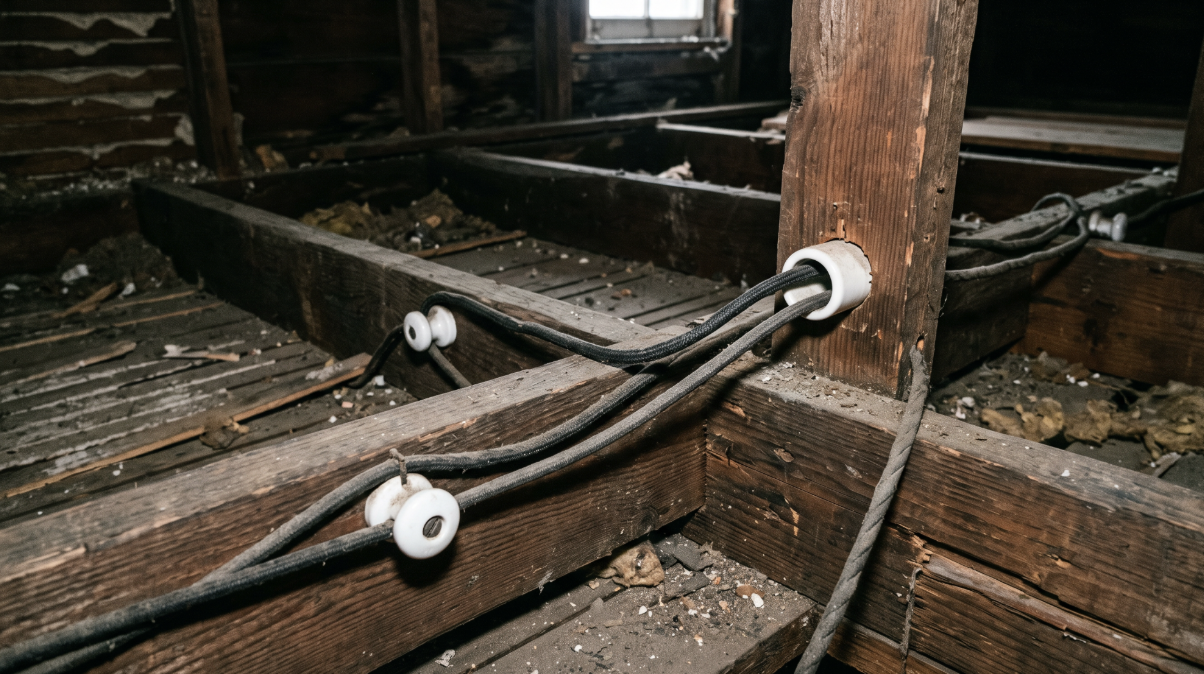
Knob-and-tube wiring was commonly installed in homes from the late 1800s through the 1930s. Unlike modern electrical cable, the system uses separate hot and neutral wires routed through walls, ceilings, attics, and crawl spaces. Porcelain knobs support the wires, while porcelain tubes protect them as they pass through wood framing.
The system was designed to allow air to circulate around the wires. However, its age, lack of grounding, limited capacity, and history of undocumented repairs can make it unsuitable for a modern home.
The Disadvantages of Knob-and-Tube Wiring
Aging Wire Insulation
Knob-and-tube wiring found in Bay Area homes may be more than 80 or even 100 years old.
Over time, the cloth and rubber insulation surrounding the conductors can dry out, crack, become brittle, or fall away. This may leave energized wiring exposed inside walls, attics, or crawl spaces.
Even when the lights and outlets appear to work normally, hidden sections of wiring may be deteriorating.
No Grounding
Traditional knob-and-tube wiring does not include an equipment grounding conductor. That is why homes with this wiring often have two-prong outlets.
Grounding provides an additional path for electrical fault current and helps modern safety devices operate properly. Simply replacing a two-prong outlet with a three-prong outlet does not create a true ground.
A licensed electrician can determine whether outlets are properly grounded and whether GFCI, AFCI, or other approved protection should be installed.
Limited Electrical Capacity
Knob-and-tube systems were installed before homes often had central air conditioning. They also came before electric dryers, microwaves, computers, heat pumps, induction ranges, EV chargers, and batteries.
Older homes may have too few circuits or outlets, with multiple rooms connected to a single circuit. This can result in:
- Frequently blown fuses or tripped breakers
- Flickering or dimming lights
- Overloaded circuits
- Warm outlets or switches
- Heavy use of extension cords and power strips
Rewiring allows the electrical system to be designed around how the home is used today.
Improper Repairs and Hidden Splices
One of the biggest concerns is what may have happened to the wiring over the past several decades.
Previous owners, remodelers, or handymen may have extended circuits, made uncovered splices, installed oversized fuses, or improperly connected modern wiring to older conductors.
These alterations may remain hidden behind walls or underneath attic flooring. A professional electrical inspection can help identify active circuits and questionable connections.
Problems With Insulation
Knob-and-tube wiring was designed to release heat into the surrounding air. Covering active wiring with attic or wall insulation may prevent proper heat dissipation and increase the risk of overheating.
Homeowners planning energy-efficiency improvements may need to replace active knob-and-tube wiring before adding insulation.
Homeowners Insurance Concerns
Active knob-and-tube wiring may also make it more difficult to obtain or renew homeowners insurance.
Requirements differ by provider. Some insurers may ask for an electrical inspection. They may require replacement of knob-and-tube wiring. They may limit coverage or decline homes with active knob-and-tube wiring.
Homeowners should confirm requirements directly with their insurance provider.
Benefits of Rewiring an Older Home
Improved Electrical Safety
A professional rewire replaces aging conductors and questionable connections with modern electrical wiring.
This can reduce concerns related to brittle insulation, overloaded circuits, exposed conductors, improper splices, and decades of undocumented repairs.
Grounded Outlets and Modern Protection
New wiring allows properly grounded outlets to be installed throughout the home.
The project may also include GFCI and AFCI protection in areas such as kitchens, bathrooms, garages, laundry rooms, bedrooms, exterior spaces, and other locations where additional electrical protection is needed.
More Outlets and Dedicated Circuits
Rewiring gives homeowners an opportunity to add outlets and create dedicated circuits for high-demand equipment.
Dedicated circuits may be added for:
- Kitchen appliances
- Laundry equipment
- Home offices
- Heating and cooling systems
- Electric water heaters
- EV chargers
- Workshops
- Entertainment systems
This reduces reliance on extension cords and helps prevent too many devices from being connected to one circuit.
Preparation for Future Electrical Upgrades
Modern wiring can prepare an older Bay Area home for future improvements, including:
- Solar panels
- Home battery storage
- EV charging
- Heat pumps
- Induction cooking
- Electric water heating
- Smart home equipment
- Accessory dwelling units
- Electrical panel upgrades
Planning these improvements together can help homeowners avoid repeated electrical work.
Easier Remodeling and Insulation Projects
Once knob-and-tube wiring is replaced, homeowners may have more freedom to remodel rooms. They can upgrade lighting, add insulation, and install new appliances.
Rewiring during a larger renovation may also reduce labor costs because walls or ceilings may already be open.
Improved Home Marketability
Knob-and-tube wiring often becomes an issue during home inspections.
Potential buyers may have concerns about safety, insurance eligibility, renovation costs, and future electrical upgrades. A permitted and documented rewire can give buyers greater confidence in the home’s electrical system.
How Much Does Knob-and-Tube Rewiring Cost in the Bay Area?
Rewiring costs vary significantly depending on the home and the project scope.
As a general planning range, Bay Area homeowners may expect:
Project scope | Estimated planning range
Limited or partial rewiring | $8,000 to $15,000
Smaller whole-home rewire | $15,000 to $30,000
Larger or more complex home | $25,000 to $40,000 or more
Historic or hard-to-access property | May exceed $40,000
These figures are general estimates, not project quotes.
A single-story home with an open attic and crawl space may cost less to rewire than a multi-story Victorian or Craftsman home with plaster walls, limited access, and several generations of electrical modifications.
What Affects the Cost?
Factors that may increase the price include:
- Home size and number of stories
- Amount of active knob-and-tube wiring
- Attic and crawl-space accessibility
- Plaster-and-lath walls
- Number of outlets, switches, and fixtures
- Electrical panel condition
- Panel or service upgrades
- Permit and inspection requirements
- Drywall or plaster repairs
- Painting and texture matching
- Lead-safe work requirements
- New dedicated circuits
- Future solar, battery, or EV charging plans
Homeowners should ask whether wall repairs, painting, fixtures, permits, and electrical panel work are included in the proposal.
Does All Old Wiring Need to Be Removed?
Not always.
Someone has already partially rewired some older homes. Only certain rooms, lighting circuits, or original sections of the property may still contain active knob-and-tube wiring.
In some situations, fully disconnected wiring may remain inside inaccessible walls. The priority is identifying every active circuit, replacing the necessary wiring, and properly documenting what has been disconnected.
Signs You May Need an Electrical Inspection
Consider scheduling an evaluation if your home was built before 1950 or you notice:
- Two-prong outlets
- Porcelain knobs or tubes
- Frequently tripped breakers
- Blown fuses
- Flickering lights
- Warm outlets or switches
- Buzzing sounds
- Burning odors
- An outdated fuse box
- Extension cords used permanently
Sparking, smoke, burning odors, or hot electrical components should be evaluated promptly by a licensed electrician.
Schedule a Knob-and-Tube Wiring Assessment
Every older home is different. Some properties may only need targeted circuit replacement, while others may benefit from a complete rewire and electrical panel upgrade.
Infinium Solar, Roofing, and Electric can evaluate your home’s electrical system, identify active knob-and-tube circuits, and explain what may be needed to support your current and future energy needs.
With electrical, solar, battery storage, EV charging, and roofing services under one roof, our team can help Bay Area homeowners create a safer and more capable home.
Contact Infinium Solar, Roofing, and Electric to schedule an electrical consultation.
Cost ranges are general Bay Area planning estimates. Final pricing requires an on-site evaluation and will vary based on the home, city, permitting requirements, and project scope.