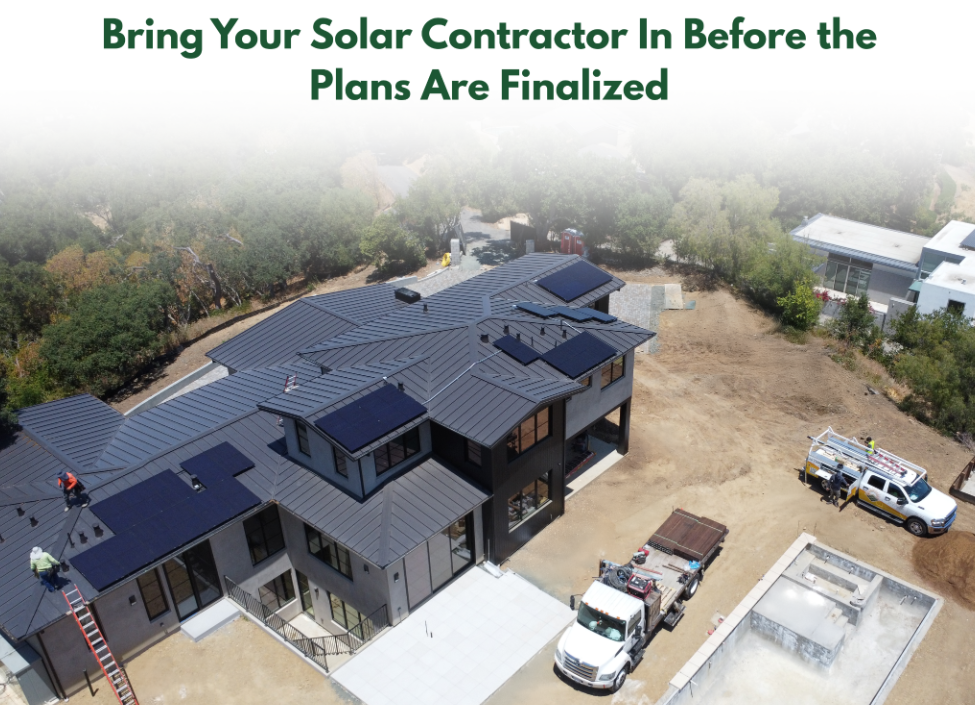
Some of the most valuable solar decisions happen long before installation begins.
For architects, engineers, developers, and general contractors on Bay Area and California projects, involve a solar and electrical contractor early. This helps spot opportunities, conflicts, and cost-saving options before work starts in the field.
This approach is often referred to as design-assist.
Instead of waiting for the construction documents to be finished, design-assist brings the contractor in earlier. The contractor works with the project team during design development. This happens before key decisions are fully set.
At Infinium Solar, Roofing, and Electric, we support project teams with solar layouts and battery planning.
We also help with electrical needs, roof coordination, and equipment placement.
We review conduit routing, constructability, and other practical installation needs.
The goal is simple:
Identify problems on the plans before they become problems on the jobsite.
What Is Solar Design-Assist?
Solar design-assist brings practical installation experience into the architectural and engineering process before plans are finalized.
The architect and engineer remain responsible for the overall project design, while the contractor provides input based on real-world installation requirements.
That input can help answer questions such as:
- Will the proposed roof layout accommodate the desired solar system?
- Is there enough space for batteries and electrical equipment?
- Where should inverters and other equipment be located?
- Are conduit pathways practical?
- Could equipment locations create conflicts with other trades?
- Is the proposed system straightforward to build?
- Are there alternatives that could reduce cost or simplify installation?
Answering these questions earlier gives the project team more flexibility.
Early Solar Layout Assistance
A roof may look like it has plenty of room for solar until every other rooftop requirement is added.
Mechanical equipment, skylights, vents, access pathways, parapets, drainage, and architectural features can all affect usable solar space.
During design development, a solar contractor can review proposed roof plans and help evaluate potential PV layouts.
This can help the design team understand:
- Approximate panel capacity
- Which roof areas may offer the best solar opportunities
- Where conflicts could occur
- How roof geometry may affect panel placement
- Whether equipment could be relocated to preserve solar space
Early coordination can be especially valuable on Bay Area projects where roof area is limited.
Electrical Load and System Considerations
Solar should not be designed in isolation from the building’s electrical system.
Electrical service size, panel locations, load requirements, EV charging, HVAC equipment, battery storage, and future electrification can all influence the final system.
Design-assist allows these considerations to be reviewed while the electrical design is still developing.
The project team can look at how solar and batteries will interact with the larger electrical infrastructure instead of trying to retrofit them into a completed electrical design.
Battery Sizing and Placement Considerations
Battery storage is becoming an important part of many California energy projects.
But battery planning involves more than selecting a product.
The project team also needs to consider:
- Available wall or floor space
- Electrical proximity
- Equipment clearances
- Service access
- Protection requirements
- Visibility
- Backup loads
- Future expansion
- Conduit pathways
Reviewing these factors during design development can help architects and engineers reserve appropriate space before construction begins.
It can also help reduce the risk of discovering late in the project that the preferred battery location will not work.
Coordinate the Roof and Solar System Together
The roofing and solar scopes are directly connected.
Solar attachments, penetrations, roof materials, drainage, equipment placement, access, and structural conditions can all affect the installation.
Design-assist allows these systems to be reviewed together.
For example, the project team may be able to adjust the location of a roof penetration during design instead of forcing the solar layout around it later.
Small changes on paper can sometimes prevent much larger problems during construction.
Plan Equipment Placement Before Space Runs Out
New construction projects can quickly become crowded with equipment.
Electrical panels, inverters, batteries, HVAC systems, plumbing equipment, communications systems, and other components may all compete for limited space.
Solar design-assist can help determine where energy equipment should be located before those spaces are committed to another trade.
Early equipment planning can help improve:
- Installation access
- Maintenance access
- Electrical routing
- Appearance
- Equipment coordination
- Future serviceability
It can also help prevent last-minute equipment relocations.
Coordinate Conduit Routing Early
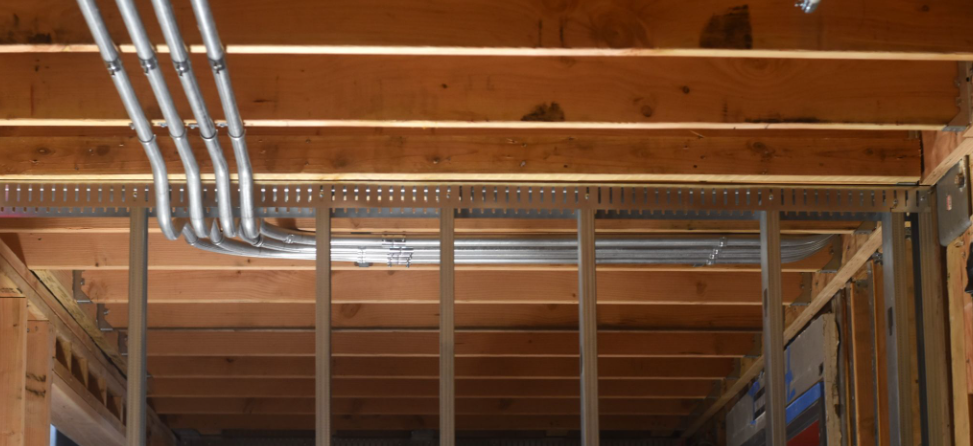
Conduit routing is easy to overlook during early design, but it can have a major impact on the finished installation.
Solar and battery systems may require pathways between the roof, inverters, batteries, electrical rooms, panels, and utility equipment.
If those pathways are considered after walls and finishes are complete, the project team may have fewer options.
Design-assist allows routing considerations to be reviewed while the building is still being designed.
That can help reduce unnecessary exterior conduit, complicated runs, and field modifications.
Structural Coordination for Solar
Solar equipment adds additional considerations to the roof and building structure.
Depending on the project, the team may need to evaluate panel attachment locations, roof assemblies, equipment loads, mounting conditions, and other structural requirements.
Early coordination between the solar contractor, architect, structural engineer, and roofing team can help identify potential conflicts before installation.
This allows structural requirements to be incorporated into the overall project instead of addressed as a late change.
Single-Line and Electrical Design Support
Solar and battery systems also require coordination with the electrical design.
Design-assist can provide useful input during the development of single-line diagrams and system layouts.
This may include reviewing:
- Service configuration
- Solar interconnection
- Battery integration
- Disconnect locations
- Electrical equipment placement
- Panel relationships
- System routing
- Future electrical needs
Earlier coordination helps make sure the proposed solar and battery system can work with the rest of the building’s electrical infrastructure.
Constructability Review Before Construction
Something can look good on a drawing and still be difficult to build
That is where constructability review becomes valuable.
A contractor can review the developing plans from the perspective of the crews who will eventually install the system.
Questions might include:
- Can installers safely access the equipment?
- Is there enough clearance?
- Can conduit realistically follow the proposed route?
- Will the solar attachments work with the roof assembly?
- Is the equipment accessible for future service?
- Are multiple trades trying to use the same space?
Finding these issues during design development can help reduce RFIs, field changes, and delays later.
Value Engineering Before the Field
Value engineering does not always mean selecting the cheapest option.
It means finding practical ways to achieve the project goals while improving cost, constructability, coordination, or efficiency.
Early contractor involvement may reveal opportunities to:
- Simplify equipment layouts
- Shorten conduit runs
- Reduce unnecessary equipment
- Improve solar panel placement
- Consolidate electrical work
- Adjust battery configurations
- Avoid expensive field modifications
- Coordinate scopes more efficiently
The earlier these opportunities are identified, the easier they are to incorporate.
Design-Assist for Bay Area New Construction Projects
Bay Area construction projects often involve tight sites, complex architecture, multiple trades, and demanding schedules.
Waiting until the solar installation phase to begin coordination can unnecessarily limit the project team’s options.
Infinium Solar, Roofing and Electric works with architects, engineers, general contractors, developers, and property owners throughout the Bay Area to provide practical solar, battery, roofing, and electrical input during the design process.
Our team can help bridge the gap between design intent and field installation.
Bring Infinium Into the Project Early
The best time to solve a construction problem is before it reaches the field.
Bring Infinium Solar, Roofing, and Electric into the conversation during design development so we can help review solar layouts, batteries, electrical systems, roof coordination, equipment placement, conduit routing, constructability, and potential value-engineering opportunities.
Bring us in before the plans are finalized. We can help identify opportunities, conflicts, and cost-saving alternatives before they reach the field.
Planning a Bay Area or California Project?
Whether you are an architect, engineer, developer, or general contractor, Infinium can support your team during the design phase.
Talk with Infinium Solar, Roofing, and Electric about design-assist for your next solar, battery, roofing, or electrical project.