Choosing a new roof is about much more than picking a color or material you like. Your roof is one of your home’s most important systems, protecting the structure from rain, sun, wind, moisture, and changing temperatures.
For Bay Area homeowners, the right roofing system should also account for energy efficiency, fire resistance, future solar plans, maintenance requirements, and the unique conditions around your property.
Whether you are replacing an aging roof or choosing materials for a new home, here are some of the most important factors to consider before making your decision.
1. Choose a Roofing Material That Fits Your Home
There is no single roofing material that is best for every property. The right option depends on your home, budget, architectural style, and long-term goals.
Common roofing materials throughout the Bay Area include:
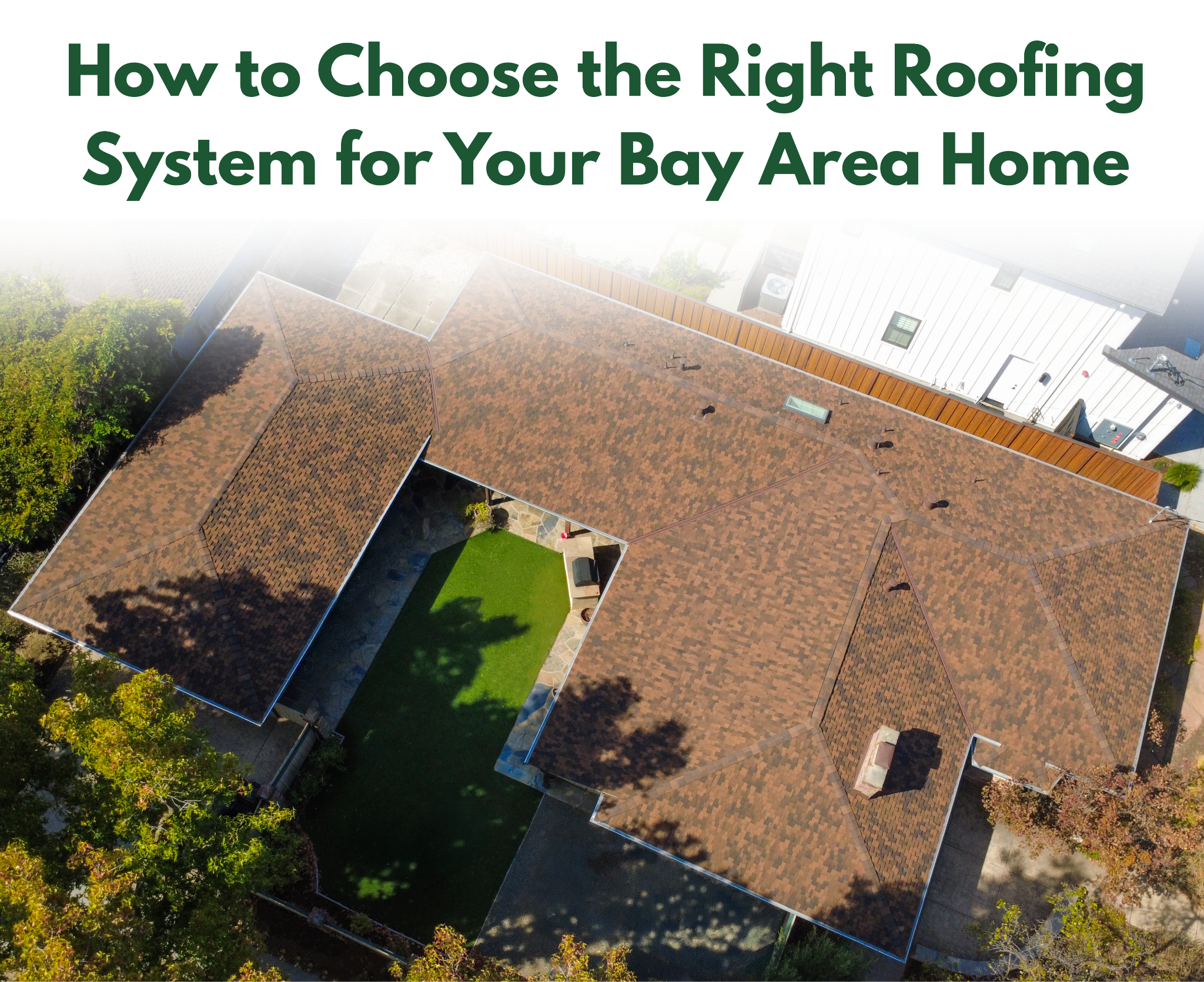
Architectural asphalt shingles
Asphalt shingles remain one of the most popular choices for residential properties. They provide a good balance between affordability, appearance, durability, and installation time. Modern architectural shingles are available in many styles and colors and can work well with solar installations.
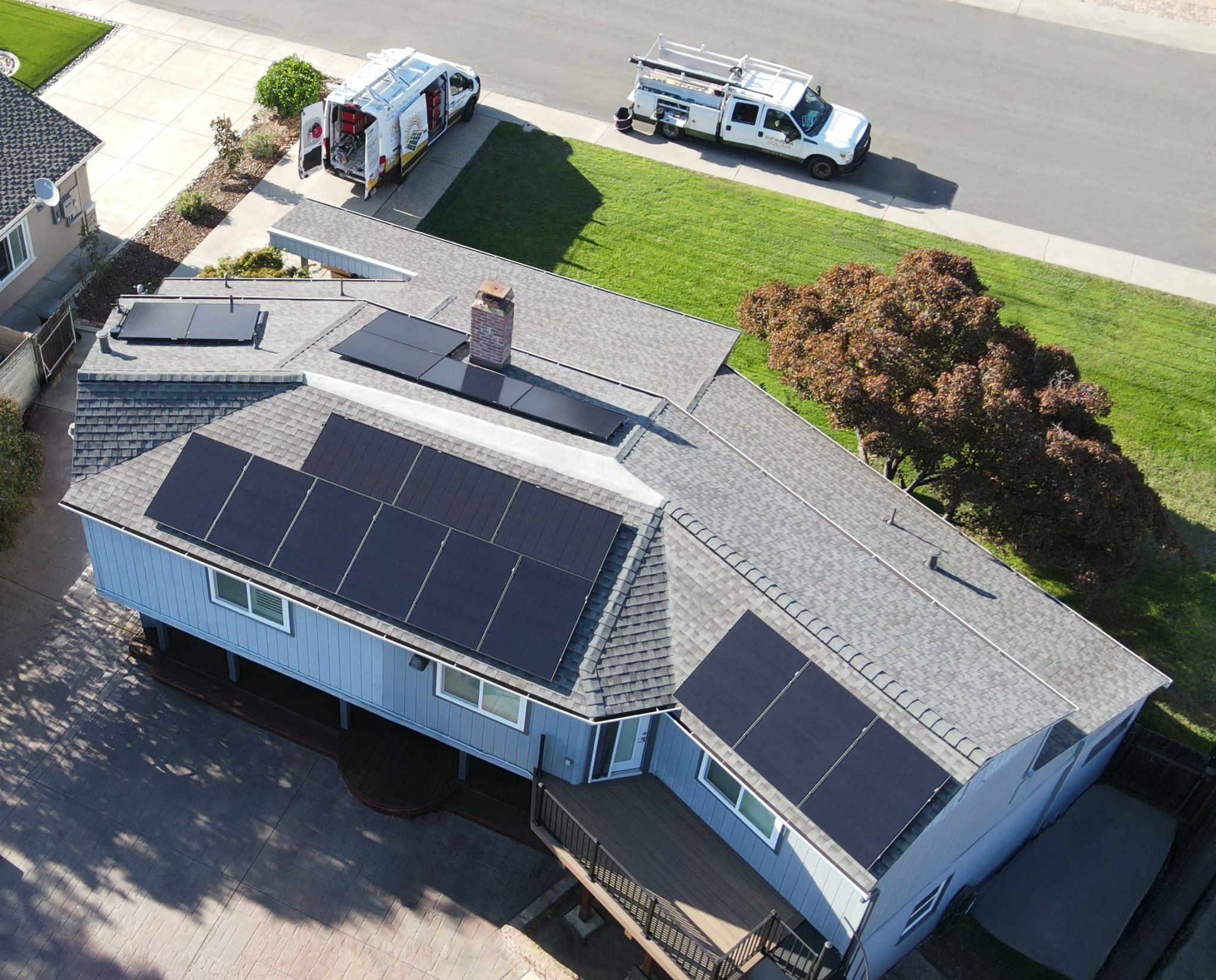
Concrete and clay tile
Tile roofing provides a distinctive appearance and can offer excellent long-term durability. Because tile is significantly heavier than asphalt shingles, the roof structure must be suitable for the additional weight.
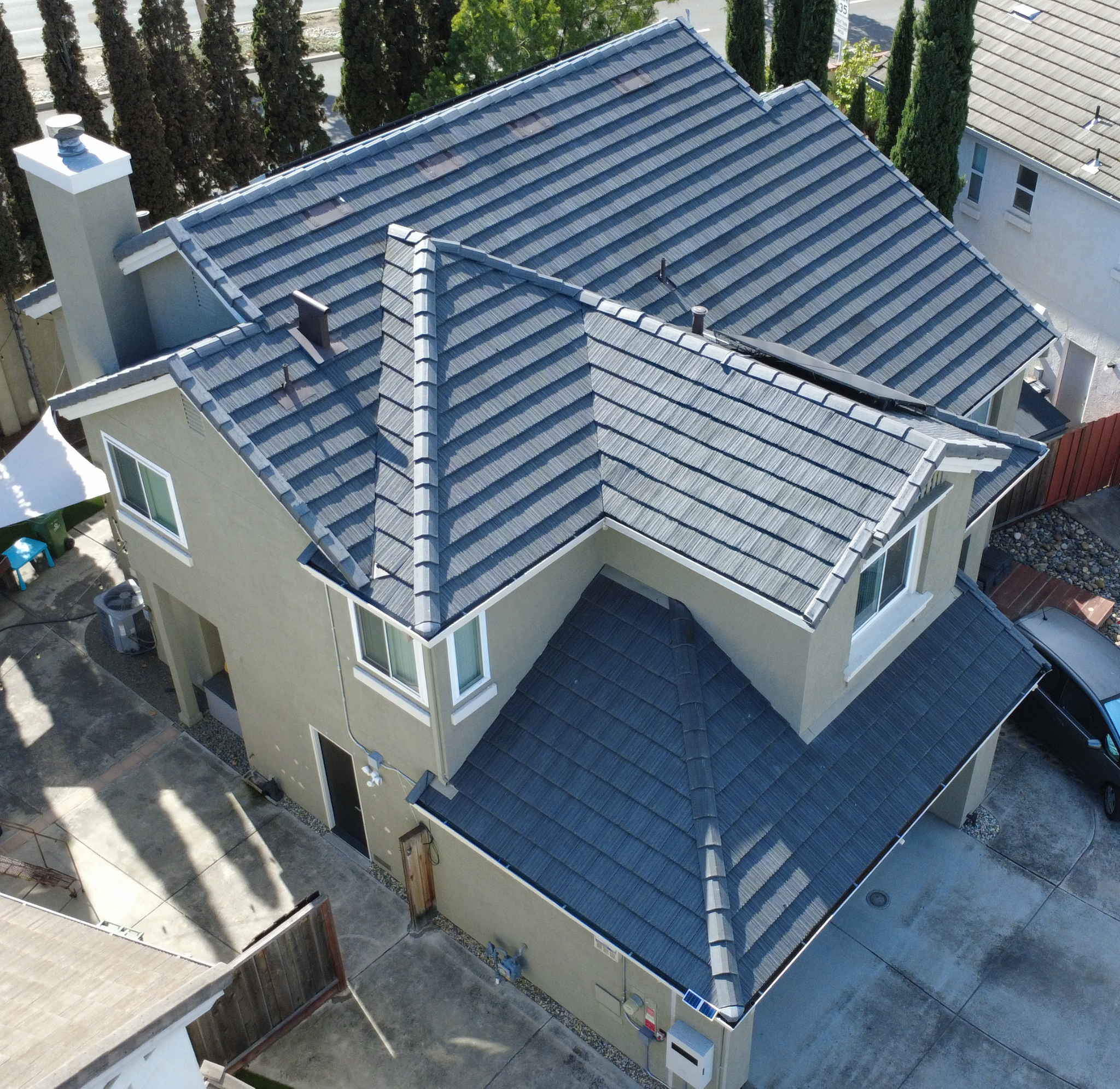
Metal roofing
Metal roofs are becoming increasingly popular for homeowners looking for durability, energy efficiency, and a modern appearance. Standing seam metal roofing can also pair particularly well with solar because mounting systems can often attach directly to the seams.
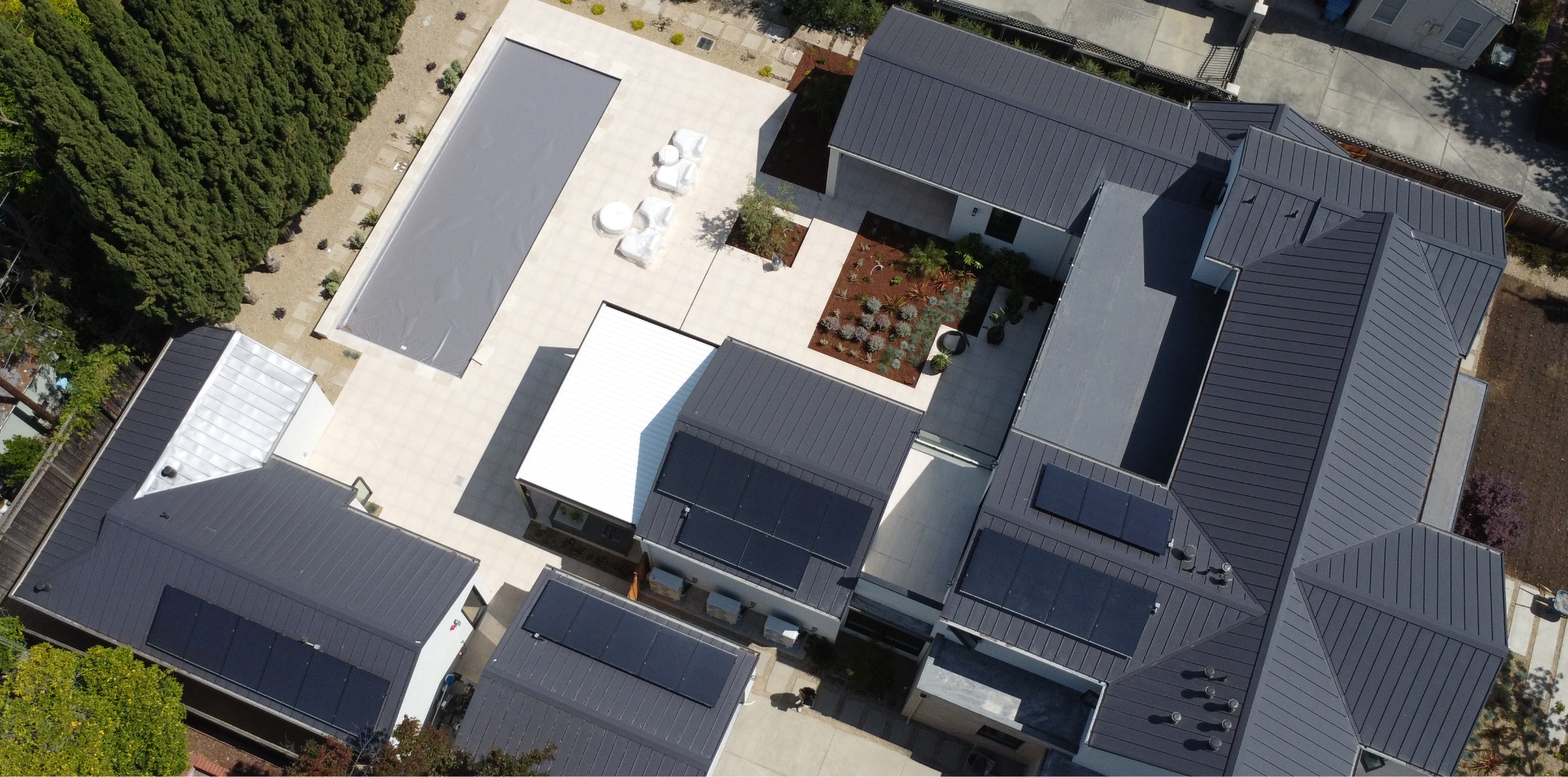
Specialty and low-slope roofing systems
Homes with flat or low-slope roof sections require materials designed specifically for those applications. Using the correct roofing system is essential for proper drainage and waterproofing.
Instead of choosing based on appearance alone, consider how the material will perform on your specific home.
2. Think About How Long You Plan to Own the Home
Roofing is a long-term investment, but not every homeowner has the same long-term plans.
If you expect to remain in your home for decades, investing in a premium roofing system with a longer expected service life may make sense. If you are preparing to sell, you may prioritize a material that offers strong curb appeal and broad buyer appeal while staying within your renovation budget.
It is also important to consider the entire roofing system, not just the visible surface. Underlayment, flashing, ventilation, waterproofing, decking, and installation quality all contribute to how well your roof performs over time.
3. Consider Bay Area Weather Conditions
The Bay Area may not experience extreme winters, but local roofs still face plenty of environmental stress.
Long periods of sun exposure can cause roofing materials to age over time. During the rainy season, damaged flashing, worn underlayment, clogged drainage systems, and small roof penetrations can become sources of water intrusion.
Homes near the coast may experience different conditions than properties farther inland, while homes surrounded by trees may have additional issues with debris, moisture, gutters, and roof maintenance.
Your roofing system should be selected with your specific location and property conditions in mind.
4. Pay Attention to Fire Resistance
Fire resistance is an especially important consideration for California homeowners.
Many communities throughout the Bay Area are located near areas with increased wildfire exposure. When selecting roofing materials, homeowners should understand the fire rating of the complete roofing assembly, particularly if the property is located within or near a Wildland-Urban Interface area.
Class A roofing assemblies provide the highest level of fire resistance under standard roofing fire classifications.
The roofing material is only one part of the equation. Proper installation, underlayment, flashing, vents, and other roof components can all contribute to the overall performance of the system.
5. Factor in Energy Efficiency
Your roof is exposed to sunlight for hours every day, making it an important part of your home’s overall energy performance.
Certain roofing materials and colors can reflect more solar energy and absorb less heat. Proper attic ventilation and insulation can also help control temperatures inside the home.
For Bay Area homeowners considering a roof replacement, this can be a good opportunity to evaluate:
- Cool roofing options
- Attic ventilation
- Insulation
- Solar installation
- Battery storage
- Home electrification upgrades
Thinking about these systems together can help create a more efficient home rather than treating each improvement as a completely separate project.
6. Think About Solar Before You Replace Your Roof
Even if you are not ready to install solar today, it is worth considering whether you might want it in the future.
Installing solar on a roof that is already approaching the end of its usable life can create additional work later. If the roof eventually needs replacement, the solar panels will typically need to be removed before roofing begins and reinstalled afterward.
If you are already planning a roof replacement, designing the roof with future solar in mind can make the process much easier.
Consider roof orientation, usable roof area, shading, vents, equipment placement, and the location of electrical components before construction begins.
At Infinium Solar, Roofing, and Electric, our roofing, solar, and electrical teams work together. That allows us to look at the entire property rather than treating the roof and solar system as unrelated projects.
7. Understand Maintenance Requirements
Every roofing system requires some level of maintenance.
Leaves and debris can collect in roof valleys and gutters. Flashing can deteriorate. Sealants can age. Tiles can crack. Shingles can become damaged or displaced.
Regular inspections can help identify small problems before they become larger leaks or structural repairs.
Homeowners should pay particular attention to their roofs before the rainy season and after severe weather. If you notice missing shingles, cracked tiles, damaged flashing, water staining, sagging, or signs of moisture inside your home, schedule an inspection.
Preventive maintenance is usually much easier than dealing with water damage after a roof begins leaking.
8. Compare More Than the Initial Price
Cost is always important, but the lowest roofing estimate is not automatically the best long-term value.
When comparing roofing proposals, look at what is actually included.
- What roofing material is being installed?
- What underlayment will be used?
- How will flashing be handled?
- Is damaged decking included or priced separately?
- What ventilation system is being installed?
- What manufacturer and workmanship warranties are included?
- Are permits and inspections included?
- Who will actually perform the installation?
Two proposals that appear similar at first can include very different materials, installation standards, and warranty coverage.
A detailed estimate makes it easier to understand exactly what you are paying for.
9. Choose the Right Roofing Contractor
The quality of a roofing material matters, but installation is just as important.
A premium roofing product installed incorrectly can still develop problems. Your contractor should understand waterproofing, ventilation, flashing, manufacturer requirements, local building codes, permitting, and the specific roofing system being installed.
Infinium Solar, Roofing, and Electric has served Bay Area homeowners since 2008 and provides roofing, solar, and electrical services through one coordinated team. We are also a GAF Master Elite® Contractor, allowing qualifying homeowners access to enhanced manufacturer-backed warranty options.
Having multiple trades under one company can be especially valuable when a project involves roofing and solar. Instead of coordinating separate roofing, solar, and electrical contractors, one team can plan the project together from the beginning.
There Is More to a Roof Than What You See
The best roofing system is not simply the most expensive option or the material with the longest advertised lifespan.
It is the system that makes sense for your home, location, budget, energy goals, and future plans.
A good roofing consultation should help you understand your options without pushing you toward a material that does not fit your property.
At Infinium Solar, Roofing, and Electric, we help Bay Area homeowners evaluate the entire roofing system, including materials, ventilation, waterproofing, energy efficiency, solar compatibility, and long-term performance.
Not Sure Which Roofing System Is Right for Your Home?
Start with a professional roof inspection.
Our team can evaluate your existing roof, discuss your goals, and help you compare roofing options for your Bay Area property.
Schedule your free roof inspection with Infinium Solar, Roofing, and Electric today.